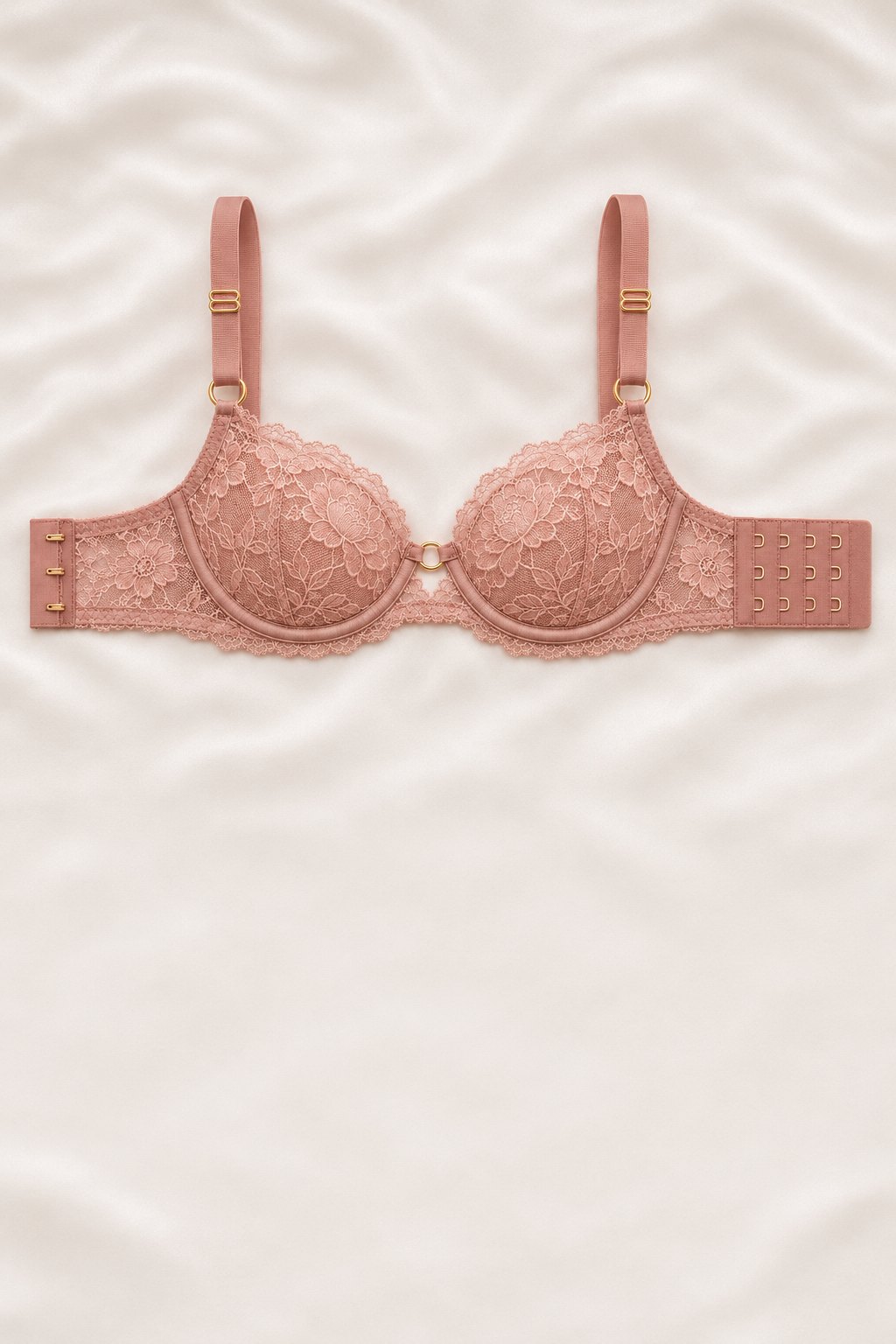
Buyer’s guide
Bra Underwire Sizes, Shapes & Replacement
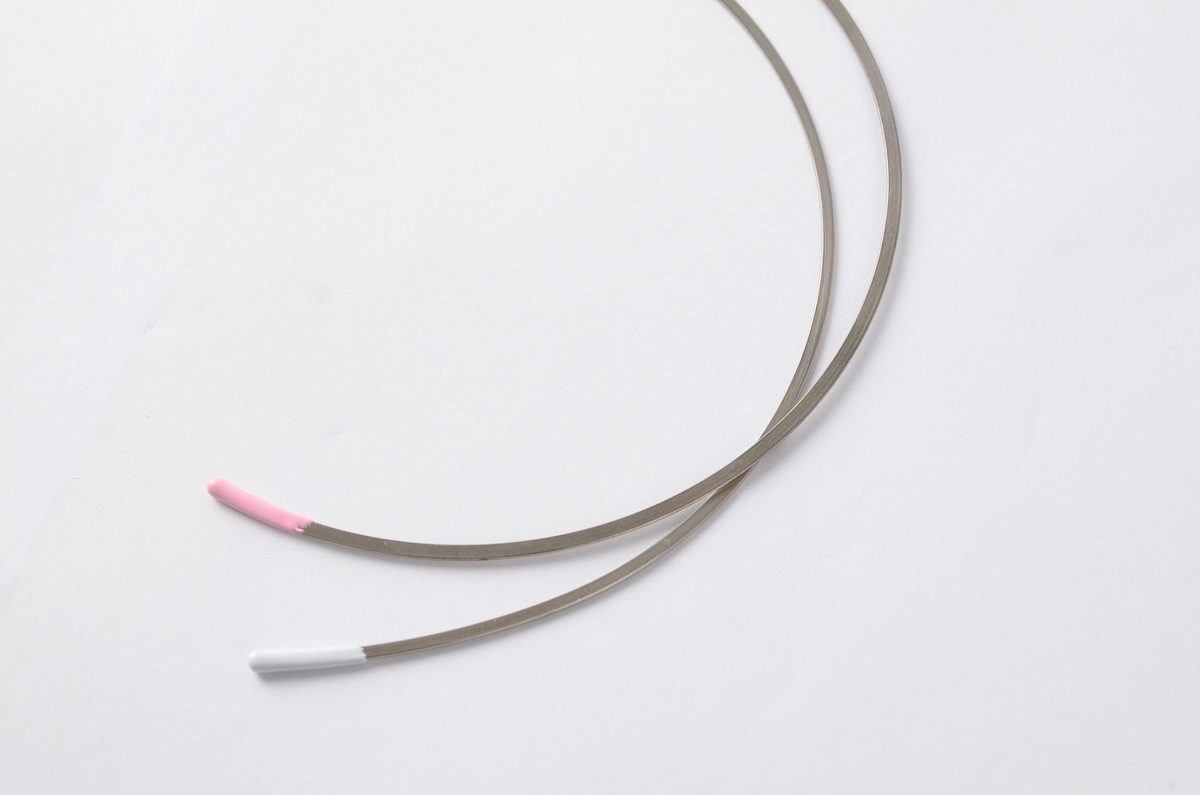
A bra underwire is sized by a wire number that follows cup volume, not the size printed on the bra label. Bras with the same cup volume share one wire, so 32D, 34C and 36B take the same size. Wire numbers are not standardised between suppliers, so always confirm a size against a 1:1 chart or a physical sample.
How are bra underwires sized?
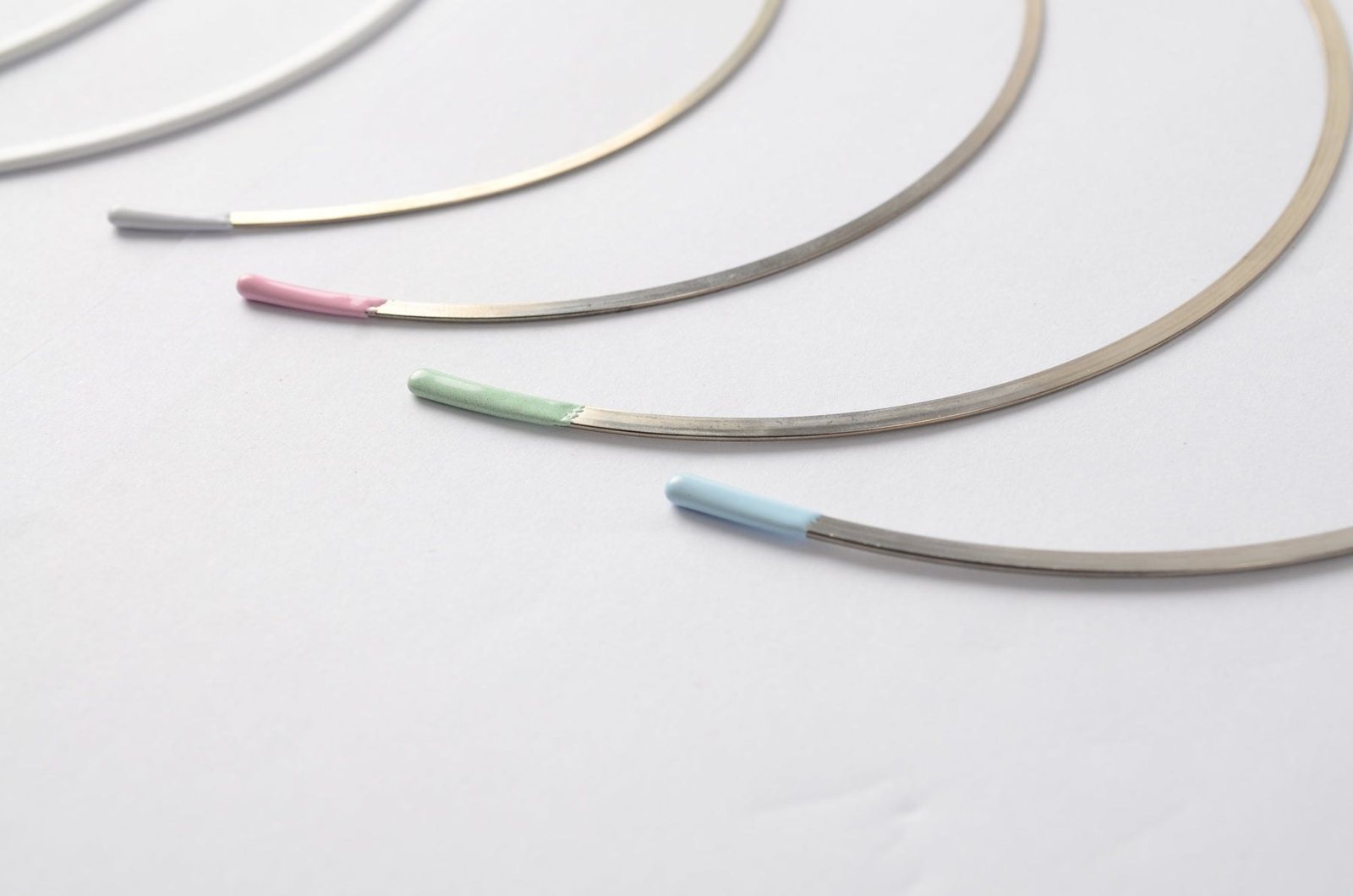
Each wire has a size number, and each step up in number is a slightly wider and longer wire. The number tracks the volume of the cup. This is why bra sizes on the same “sister size” line use the same wire: when the band goes up one size and the cup letter goes down one, the cup volume and the wire stay the same.
| These bra sizes… | …share one wire |
|---|---|
| 30D · 32C · 34B · 36A | Same wire size |
| 32D · 34C · 36B · 38A | One size up |
| 34D · 36C · 38B · 40A | Two sizes up |
The numbering itself differs from one wire maker to the next. Do not order by number alone from a new supplier: print the supplier’s wire chart at 100% and lay your pattern or an existing wire on top of it.
What are the main underwire shapes?
| Shape | How it differs | Used for |
|---|---|---|
| Regular | Both ends rise to a moderate, similar height | Everyday full-coverage and T-shirt bras |
| Demi | Both ends are shorter | Balconette and half-cup bras |
| Plunge | Centre-front end is cut low; side stays higher | Low-neckline and push-up bras |
| Strapless / long | Side end rises higher and the wire is stiffer | Strapless bras, bustiers, fuller cups |
| Special shape | Made to a drawing: continuous, V or U forms | Monowire, deep-V and design-led styles |
What should I specify when ordering underwires?
- Shape and size — a wire number from the supplier’s chart, or a 1:1 drawing for a special shape.
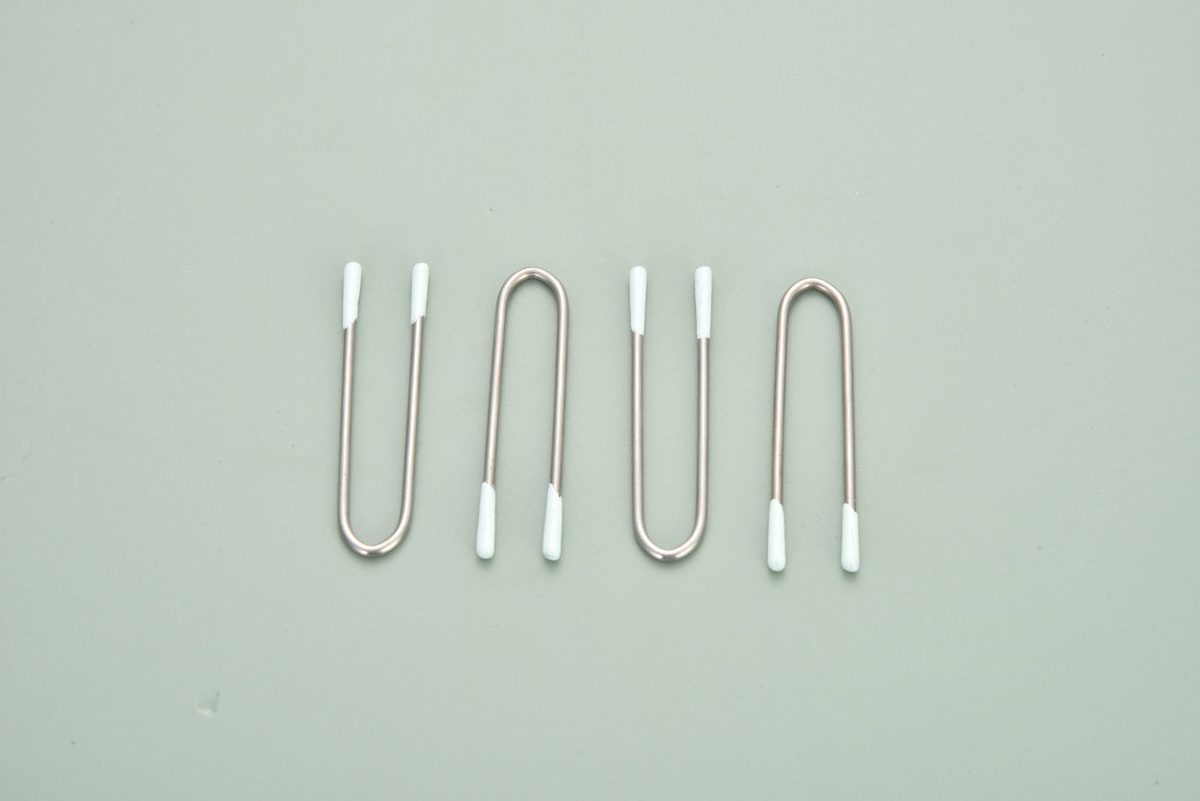
- Material — stainless steel, or carbon steel with a nylon coating. Both resist rust through repeated washing.
- Stiffness — set by the wire’s width and thickness. Larger cups and strapless styles need a firmer wire.
- Tips — the soft cap on each end that stops the wire piercing the channel. Specify the tip colour if the channel fabric is light or sheer.
- Coating colour — white is standard; nude or black is used under sheer fabrics.
How do I measure an underwire for replacement?
Lay the old wire flat on paper without stretching it open and trace around it. Measure the straight distance between the two tips (the inner width) and the length along the curve. Match both numbers to a wire chart. A wire springs open slightly when worn, so a replacement that looks a little narrower than the breast root when flat is usually correct.
Why do underwires poke out, and how is it prevented?
A wire works through its channel when the tip is hard or sharp, when the wire is too long for the channel, or when the channel fabric is too thin. In production this is controlled with well-formed tips, a wire a few millimetres shorter than the channel so it can move, and a bar-tack at each end of the channel.
Frequently asked questions
Do all bra brands use the same underwire sizes?
No. Wire numbering is set by each wire maker. Two wires with the same number from different suppliers can differ in width and length, so sizes must be checked against a 1:1 chart or a sample.
Which bra sizes use the same underwire?
Sizes with the same cup volume share a wire: for example 32D, 34C and 36B. Going up one band size and down one cup letter keeps the same wire.
Stainless steel or nylon-coated underwires?
Stainless steel resists rust by itself and suits a slim wire. Nylon-coated steel adds a smooth layer that protects the fabric and can be coloured to disappear under sheer materials.
See all bra underwires, or request free samples.